After we had sent our e-mail asking for permission we waited 2 days for a reply. We finally got confirmation on the 18th September that we were allowed to use the song to create our video. The response came from her manager/owner of Never Fade Records James Barnes.
The regulating body for TV shows, music videos, adverts etc is OFCOM (The Office of Communications).
OFCOM is a government appoved scheme to regulate the content of any broadcasting, telecommunications and postal company in the UK. OFCOM was set up to represent the interests of the public and the consumers by regulating what can and cannot be broadcast to the public which could be considered harmful or offensive material.
It was announced OFCOM would be created in the Queen's Speech to parliament in June 2001 which would replace existing authorities. It would be known as a "super-regulator" to over see all media channels.
OFCOM have a set of specific rules to which anyone making a peice of televised media must stick to.
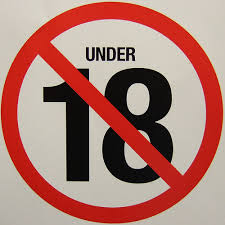
The first set of rules is to protect under 18's from being exposed to harmful/sexual content./drugs/language.
The term children is used for under 15's therefore any content shown before the watershed (any content that defies these rules must be shown after 9pm and before 5.30am) should stick to these guidlines for children:
Material that might seriously impair the development of people under eighteen must not be broadcast.
Broadcasters must take all reasonable steps to protect people under eighteen.
Children must also be protected by appropriate scheduling for programmes that have unsuitable material for them.
Drugs, smoking, solvents and alcohol
Drugs, smoking, solvent use and excess use of alcohol must not be shown in any programme aimed at children. Generally it must be avoided and must not be condoned, glamorised or encouraged if shown before the watershed It also must not be condoned, gamorised or encouraged in other programmes likely to be widely seen or heard by under 18's. OFCOM understands that a younger audience may be influenced by seeing these types of images and try and repliate them that is why these rules are in place. Violence and dangerous behaviour
OFCOM regulates the amount voilence that can be shown before the watershed. They regulate violence, its after-effects and descriptions of violence, whether verbal or physical.This must be appropriately limited in programmes primarily aimed at children.
Violence, whether verbal or physical, that could be imitable by children that could be harmful or dangerous to others must never be shown before the watershed and never in promgrammes primarily aimed at children.
Offensive language
The most offensive language must never be used in any program before the watershed or in any program directed at children. if used beofre the watershed it must be justified by the context and frequent use of any offensive language must be avoided at all times before the watershed.
Sexual material
Material equivalent to the British Board of Film Classification (BBFC) 18+ rating must not be broadcast at any time and adult sex material (material that contains images and/or language of a strong sexual nature which is broadcast for the primary purpose of sexual arousal or stimulation) must not be broadcast at any time other than after 11pm - 5.30am Employing under 18's
When employing an under 18 to be used in a tv program/music video etc OFCOM has rules that all broadcasters must comply with. Broadcasters must take into account the child’s welfare. If under sixteen broadcasters must ensure that there is consent from a parent or guardian. When given consent by parents or guardians, OFCOM believe it is the broadcaster’s duty to make sure the parent understands the full implications of their child’s participation. Program makers are told to highlight both the positive and negative likely outcomes from participating in program.
Flashing images
Flashing images can cause seizures for people with photosensitive epilepsy. OFCOM have specific guidelines for broadcasters who use these flashing images in their programmes. All broadcasters should give a clear warning before the programme that flashing images will be used.
My music video
After reading the OFCOM guidelines i now know what i can and cant put in music video.
We were not planning on using any images of drug use, nudity or using any offensive bad language in the video so therefore those guidelines do not apply to the type of video I would like to create.
I will have under 18's in my video so I will need to comply with those rules however they are older than 16 so I do not need written parental consent to have them in the video.
I wasnt planning on having flashing images in my video but if I do I will need to make sure that they comply with the rules.
To use the song by Gabrielle Aplin we had to aquire permission from the record label and or her manager. For this we had to email both of them and ask to use the song otherwise it would infringe the copyright laws set by OFCOM. Here is the e-mail we sent..
Now all i have to do is wait for a reply from her record company saying whether i can or can not use her song!
Indie music and videos are less common than pop or popular music meaning the codes and conventions arent set in stone however most music videos today share the same codes and conventions even if they differentiate in genre from indie to rock. The definition of indie music is that it is a sub culture of pop or popular music but is independent music and this is where the word 'indie' comes from.
Music videos use a range of different techniques, camera shots and mise-en-scene to create a story, give emphasis and set locations.
Editing is an important factor in making a good music video the pace must coincide with the pace of the song. Jump cuts are the predominant editing technique in music videos this is because as it allows the scene to change quickly with the song.
The costumes the actors/artists/bands are wearing usually go with the genre for example in pop videos artists might wear bright clothing but in a rock video they might wear more black.
Sound is obviously dominated by the vocals of the song, instruments and in some cases they might stop the song for the talking/acting.
Lighting ties in with the type of music, for example some videos are visually bright. The props, clothing, lighting etc are all brightly coloured to tie in with the genre.
Understanding these different codes and conventions is key for creating a good music video that the target audience of that genre will want to see. I have chosen 2 videos of the same genre i would like to do for my final project. I have done this to identify and prove if the music videos do stick to the codes and conventions no matter what genre they are. The music videos that I have chosen to evaluate are Florence and The Machine - You've Got The Love and Lana Del Rey - Blue Jeans.
Above is the music video forFlorence and The Machine - You've Got The Love
From watching this video you can tell it is an indie/pop song as it sticks to the codes and conventions of an indie music video.
This is the establishing shot of the video. This sticks to the codes and conventions of an indie music video as it uses dark colours and a close up.
The screenshot above is a long shot to show the location and is neutral colours not too bright and the props are also neutral.
The screenshot above is a close up of the artist and the colours are again neutral to stick to the codes and conventions the mist creates a dreamy feel to the video.
The next video is Lana Del Rey - Blue Jeans
Above is the music video for Lana Del Rey - Blue Jeans
I chose this video as it is also an indie music video but less of a pop song/video and really sticks to the codes and conventions of a true indie music video.
The screenshot above is the establishing shot for the video and this is a close up and also a long duration shot lasting for 30 seconds. Also the colours are black and white to reflect the sad nature of the song and fitting in with the genre.
This shot is an etreme close up when the artist is putting emphasis on a certain part of the song. Again the video is still in black and white.
This mid shot of the singers head shows her location (a swimming pool).
After looking at these 2 videos, I have seen that they do include a lot of the obvious conventions that all music videos seem to have, but this genre uses and twists them in a different way. To make my text look more profesional i need to incorporate some of these specific indie codes and conventions so the target audience will be satisfied with the end product. From watching and analysing these music videos in my text i will need to maybe add black and white in, use neautral colours and have a simple background/idea.
After deciding to create a music video as my final piece of practical work, I started looking for potential songs I could use. i had a few ideas of the genre i wanted to use so i mainly researched videos of indie type bands and music.
Here are some of the songs I may potentially use for my music video...
To Build A Home - Cinemactic Orchestra...
Good Morning Sunshine - Alex Day...
Home - Gabrielle Aplin...
This Kiss - Alex Day...
We decided that the type of music video we wanted to create was best suited to Gabrielle Aplins's song Home. We then went on to find out which record label Gabrielle Aplin was signed to and Started to write them an email asking for permission to use her song
A music video is a taped performance of a recorded song, usually accompanied with dancing and a story line that will interpret the lyrics.
In 1894, sheet music publishers Edward B. Marks and Joe Stern hired an electrician named George Thomas to promote sales of their song "The Little Lost Child". Using a magic lantern, Thomas projected a series of still images on a screen simultaneous to live performances. This would become a popular form of entertainment known as the illustrated song, the first step towards a music video
Between 1902 and 1917 was known as the 'phonoscène era'. This was the prelude of what would be the music video. It combined a sound recording with a camera shot of actors lip-synching to the song. The recording and film were synchronized by Léon Gaumont in 1902. The first phonoscènes were presented by Gaumont in 1902 in France.
In the 1950's the Scopitone (like a visual jukebox) was invented in France. This meant that short films could now be produced by many French artists, such as Serge Gainsbourg and Françoise Hardy to accompany their songs. The use of the scopitone then spread to other countries and similar types of technology came about, such as the Cinebox in Italy and Color-Sonic in the USA.
The earliest music video of a Top 40 hit, was Jan & Dean's "Surf City", which was produced in the summer of 1963.
Music Videos today
Music videos today are extremely popular, and even have their own channels including The Box, Viva and the most famous MTV. MTV is an American network based in New York City. Launched on August 1st 1981 MTV's original purpose was to be “Music Television” showing music videos 24 hours a day, 7 days a week. MTV had a huge impact on the music industry and popular culture, the idea of a dedicated video-based outlet for music was introduced and both artists and fans found a central location for music events, news and promotion. MTV have faced criticisms for the moral influence they have on young people, including issues related to censorship and social activism.
Technology & Developments
MTV aired their first music video of The Buggles' song 'Video Killed The Radio Star'. After this music videos became incresingly popular but at this stage when a video ended the screen would go to black while someone changed the video tape in the VCR. Over the years and as technology has become more advanced videos have become available on the internet as well as television and the 2 most used websites for this are Vimeo a small video sharing site and Youtube.
YouTube is a video sharing website which was created in 2005. The site allows users to upload, share and view videos. Music videos are uploaded to youtube everyday with many singers having their own personal accounts. Youtube allows more people to view the video as many times as they want and whenever they want. This has meant that the viewing of music video channels has declined rapidly.
Now in the music industry there is more affordable and faster equipment to create better quality videos. Cheaper laptops, better software and filming equipment has allowed upcoming singers/song writers/film makers to create their music video to a higher standard. YouTube and similar social networking sites have allowed these people to share their music videos with the public including people high up within the music industry looking for creative and talented individuals.